

Curved fan blades improve airflow efficiency by up to 20% over straight fan blades, making them the optimal choice for enhancing air movement in diverse applications. This design not only boosts performance but also minimizes noise and energy usage, crucial attributes when selecting the ideal fan for ceiling, industrial, or ventilation systems.
Among the most common blade designs are curved fan blades and straight fan blades. While both are designed to circulate air, they differ in airflow characteristics, efficiency, durability, maintenance, and ideal applications.
This article provides a comprehensive comparison between curved fan blades and straight fan blades, helping you understand which option is best suited for your specific needs.
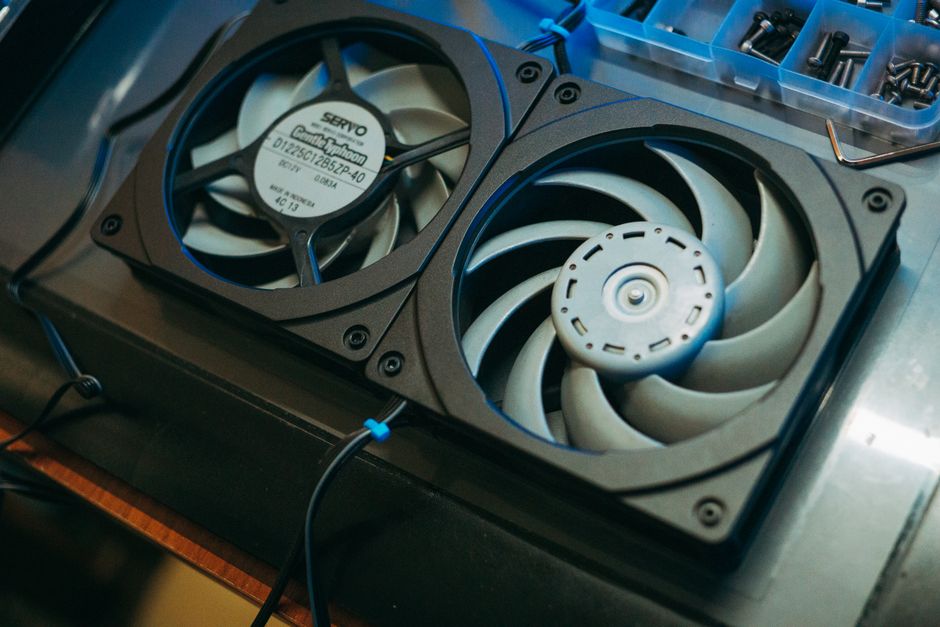
What Are Curved Fan Blades?
Curved fan blades are designed with a smooth arc or aerodynamic shape rather than a flat profile. The curvature allows air to move more naturally across the blade surface, reducing turbulence while improving airflow efficiency.
These blades are commonly found in:
- Ceiling fans
- HVAC systems
- Computer cooling fans
- Industrial ventilation systems
- Automotive cooling fans
- Air conditioners
The curved design is based on aerodynamic principles similar to aircraft wings, allowing the fan to move larger volumes of air with less effort.
What Are Straight Fan Blades?
Straight fan blades have a flat or nearly flat profile that extends directly from the hub without significant curvature. They rely primarily on blade angle (pitch) to move air rather than aerodynamic shaping.
Straight blades are frequently used in:
- Industrial exhaust fans
- Workshop ventilation
- Agricultural fans
- Heavy-duty cooling systems
- Basic household fans
- Some commercial ventilation equipment
Their simple construction makes them durable, affordable, and easy to manufacture.
How Fan Blade Design Affects Performance
The shape of a fan blade influences several important performance factors, including:
- Airflow volume
- Air pressure
- Energy efficiency
- Noise level
- Vibration
- Motor load
- Durability
- Maintenance requirements
Choosing the right blade design depends on balancing these factors with the intended application.
Airflow Performance
Curved Fan Blades
Curved blades generally produce smoother airflow because they guide the air gradually through the fan. This reduces airflow separation and minimizes turbulence.
Advantages include:
- Higher airflow efficiency
- More consistent air distribution
- Reduced air resistance
- Better circulation in larger spaces
Because the airflow is smoother, curved blades often create stronger airflow even when operating at lower speeds.
Straight Fan Blades
Straight blades move air primarily by pushing it directly forward.
Their airflow characteristics include:
- Direct airflow
- Strong localized air movement
- Less efficient circulation over large areas
- Greater turbulence
Straight blades can be highly effective in environments where concentrated airflow is more important than smooth circulation.
Energy Efficiency
Curved Fan Blades
Curved blades are generally more energy efficient because they move more air while requiring less motor power.
Benefits include:
- Lower electricity consumption
- Reduced motor stress
- Better airflow per watt
- Lower operating costs over time
Many energy-efficient ceiling fans and HVAC systems use curved blades for this reason.
Straight Fan Blades
Straight blades typically require more energy to move the same amount of air because they create greater aerodynamic drag.
This often results in:
- Higher electricity usage
- Increased motor workload
- Slightly reduced efficiency
However, in smaller or low-cost systems, the efficiency difference may not be significant.
Noise Levels
Curved Fan Blades
Curved blades usually operate more quietly.
Their aerodynamic shape reduces:
- Air turbulence
- Vibration
- Wind noise
- Blade resistance
This makes them ideal for:
- Bedrooms
- Offices
- Hospitals
- Libraries
- Living rooms
- Classrooms
Straight Fan Blades
Straight blades generally produce more noise due to:
- Increased turbulence
- Greater air resistance
- More vibration
Noise levels become especially noticeable at higher fan speeds.
For industrial environments, this is often acceptable, but it may not be suitable for quiet indoor spaces.
Air Pressure
Air pressure refers to the fan’s ability to push air through ducts, filters, or restrictive spaces.
Curved Blades
Curved blades generally produce balanced airflow with moderate pressure.
They perform well in:
- HVAC systems
- Ventilation
- Air conditioning
- Cooling systems
Straight Blades
Straight blades often generate stronger direct pressure.
This makes them useful for:
- Exhaust systems
- Dust removal
- Workshop ventilation
- Industrial cooling
Durability
Curved Fan Blades
Modern curved blades are made from:
- Aluminum
- Steel
- Plastic
- Composite materials
- Fiberglass
Although durable, the curved shape can sometimes be more susceptible to damage if subjected to heavy impacts.
Straight Fan Blades
Straight blades have a simpler structure and are often stronger in demanding environments.
Advantages include:
- Excellent impact resistance
- Easy repairs
- Greater structural strength
- Longer service life in industrial settings
Maintenance
Curved Fan Blades
Cleaning curved blades may require more attention because dust can accumulate along the curved surfaces.
Regular maintenance includes:
- Dust removal
- Blade inspection
- Motor lubrication (if applicable)
- Balance checks
Straight Fan Blades
Straight blades are easier to clean because of their flat surfaces.
Maintenance is usually faster and simpler, especially in industrial environments where regular cleaning is required.
Manufacturing Cost
Curved blades require:
- Precision engineering
- Specialized molds
- Aerodynamic testing
- Advanced manufacturing techniques
As a result, they are usually more expensive.
Straight blades have a simpler manufacturing process, making them more affordable for large-scale production.
Applications
Best Uses for Curved Fan Blades
Curved fan blades are commonly used in:
- Residential ceiling fans
- Air conditioners
- HVAC systems
- Computer cooling fans
- Medical equipment
- Commercial ventilation
- Automotive cooling systems
These applications benefit from quiet operation and energy efficiency.
Best Uses for Straight Fan Blades
Straight blades are ideal for:
- Industrial exhaust fans
- Warehouses
- Factories
- Workshops
- Agricultural ventilation
- Heavy-duty cooling
- Dust extraction systems
These environments prioritize durability and strong airflow.
Advantages of Curved Fan Blades
- Excellent airflow efficiency
- Lower energy consumption
- Quieter operation
- Reduced vibration
- Better aerodynamic performance
- Improved air circulation
- Modern appearance
- Lower long-term operating costs
Disadvantages of Curved Fan Blades
- Higher purchase price
- More complex manufacturing
- Slightly more difficult to clean
- May require precision balancing
Advantages of Straight Fan Blades
- Lower manufacturing cost
- Simple design
- Easy maintenance
- Strong direct airflow
- Excellent durability
- Suitable for harsh environments
- Easier replacement
Disadvantages of Straight Fan Blades
- Higher noise levels
- Lower aerodynamic efficiency
- Increased energy consumption
- More vibration
- Less uniform airflow
Curved Fan Blades vs Straight Fan Blades Comparison Table
| Feature | Curved Fan Blades | Straight Fan Blades |
|---|---|---|
| Airflow | Smooth and efficient | Direct and forceful |
| Energy Efficiency | High | Moderate |
| Noise Level | Low | Higher |
| Air Pressure | Balanced | Strong direct pressure |
| Durability | Good | Excellent |
| Maintenance | Moderate | Easy |
| Manufacturing Cost | Higher | Lower |
| Appearance | Modern | Simple |
| Residential Use | Excellent | Good |
| Industrial Use | Good | Excellent |

Which Fan Blade Should You Choose?
The right choice depends on your specific needs.
Choose curved fan blades if you want:
- Quiet performance
- Energy savings
- Better airflow efficiency
- Comfortable indoor air circulation
- Modern fan technology
Choose straight fan blades if you need:
- Maximum durability
- Low purchase cost
- Industrial performance
- Strong directional airflow
- Easy maintenance
For homes and offices, curved blades generally provide a better balance of comfort, efficiency, and noise reduction. For factories, workshops, and heavy-duty ventilation systems, straight blades remain a reliable and cost-effective solution.
Conclusion
Both curved and straight fan blades have distinct strengths, making each suitable for different applications. Curved fan blades excel in aerodynamic efficiency, quiet operation, and energy savings, making them ideal for residential, commercial, and modern HVAC systems. Straight fan blades, on the other hand, offer rugged durability, simple maintenance, and powerful directional airflow, making them well suited for industrial and heavy-duty environments.
When selecting a fan, it’s important to consider factors such as airflow requirements, noise tolerance, energy efficiency, installation environment, and long-term operating costs. Understanding the differences between curved and straight fan blades will help you choose the most effective solution for your cooling or ventilation needs, ensuring reliable performance and value over the life of the fan.